
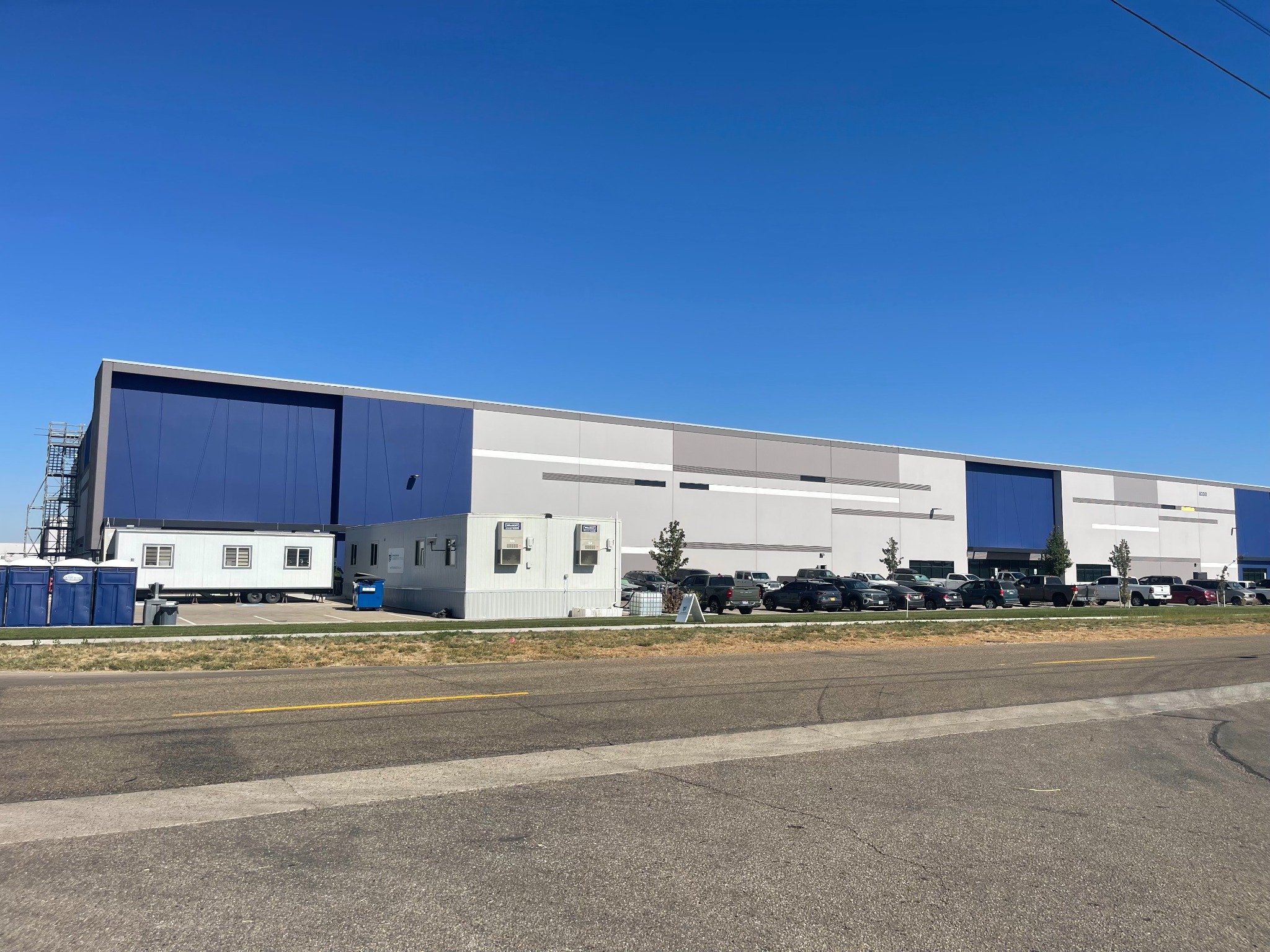
An ordinary-looking industrial building can have an entirely different future behind its walls.
I visited 8300 Birch Lane in Nampa’s Park 84 this week. The blue and gray exterior looks familiar to anyone who follows modern industrial development. The posted permit board tells a different story: Project Bedrock is converting the existing warehouse into a data center.
What’s happening at Birch Lane
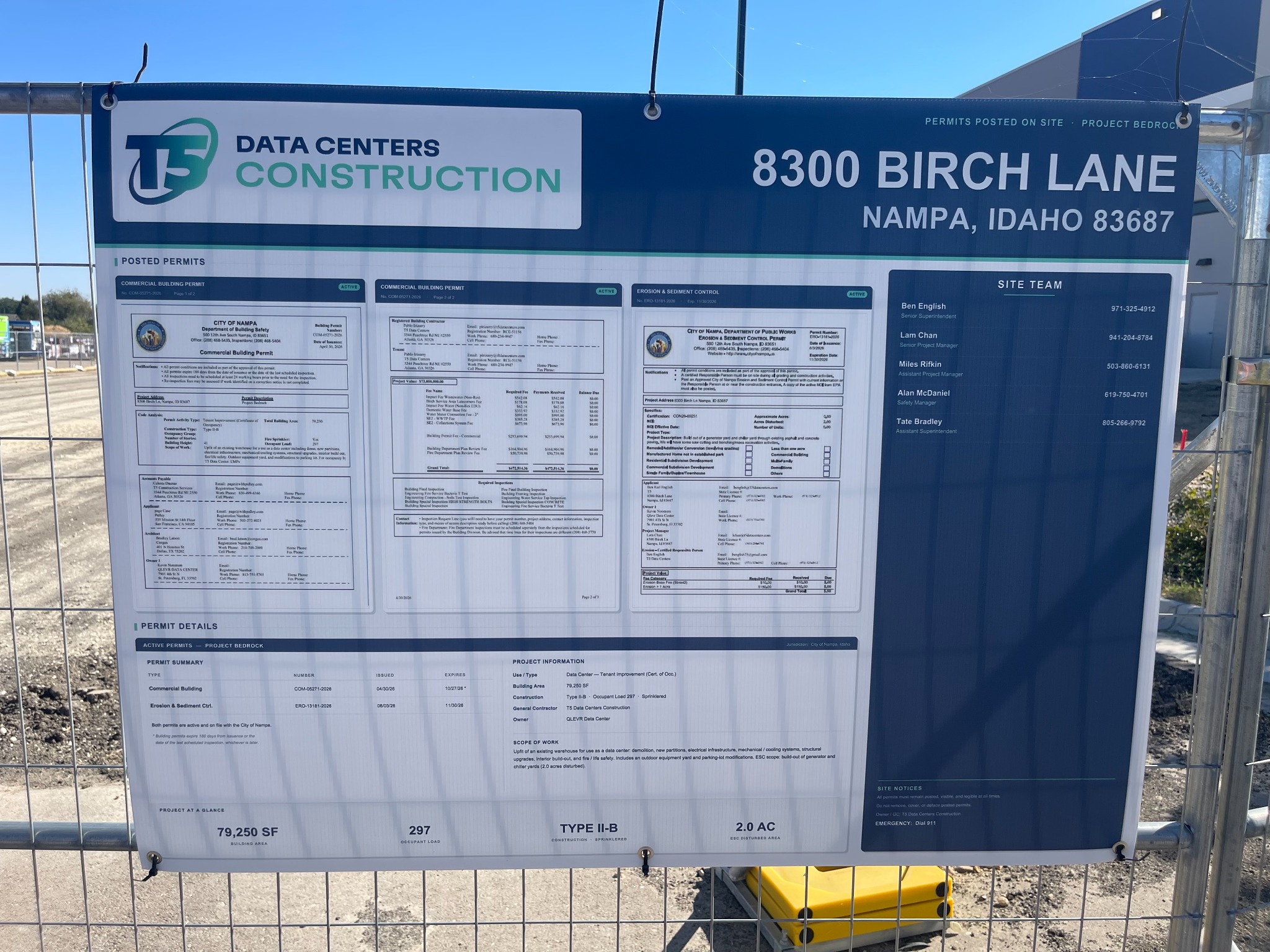
The posted City of Nampa commercial building permit, COM-05271-2026, was issued April 30, 2026. It identifies a 79,250 SF building and lists a $73 million project valuation for the upfit—approximately $921 per square foot of building area.
That figure is the stated permit valuation. It does not establish actual spending, the property’s market value or the value of its lease.
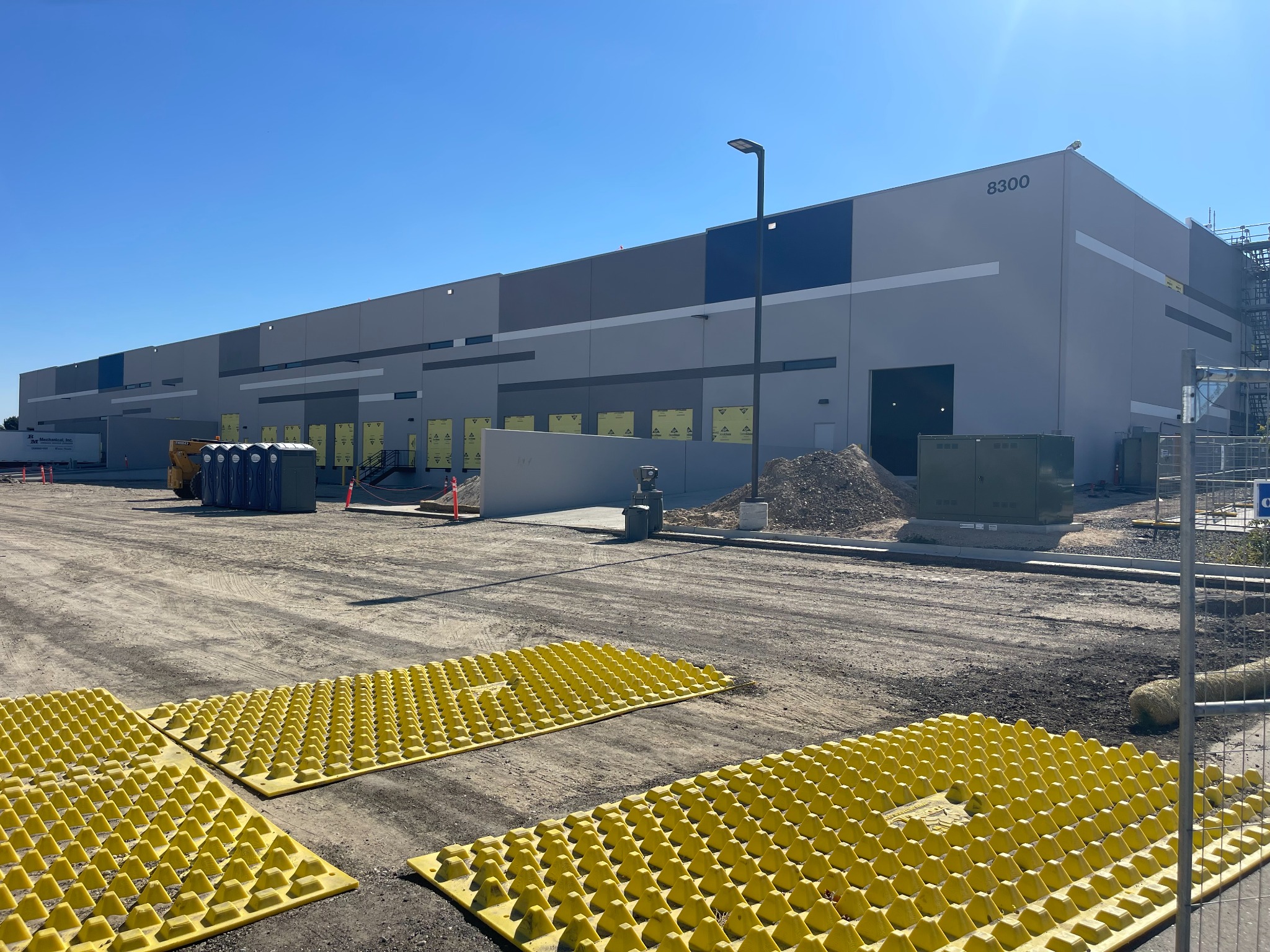
The posted project board identifies QLEVR Data Center as owner and T5 Data Centers Construction as general contractor. The work includes demolition, new partitions, electrical infrastructure, mechanical and cooling systems, structural upgrades, interior build-out, fire and life-safety work, an outdoor equipment yard and parking modifications.
BoiseDev reported in September 2025 that Nampa approved a conditional use permit for a single-user networking data center at this address. Its reporting described an initial power requirement of 2.25 megawatts, eventually increasing to 8.25 megawatts. Those are reported plans, rather than confirmation of today’s installed or energized capacity.
A different potential user for the right property
This project illustrates a question industrial owners should ask: which uses can your building realistically support?
A data center conversion requires more than a modern exterior. Owners considering this user category should establish:
- Deliverable power: electrical service, utility-confirmed capacity, upgrade requirements, cost and delivery timing. Proximity to a substation alone does not establish available power.
- Fiber connectivity: available carriers, connection routes and the redundancy required by the prospective user.
- Building suitability: structural capacity, equipment layout, cooling requirements and the feasibility of specialized improvements.
- Site and approval flexibility: space for generators and cooling equipment, access and security, noise considerations and applicable land-use approvals.
Project Bedrock demonstrates one conversion in Nampa. It does not establish that every newer industrial building qualifies, or that comparable demand exists throughout the Treasure Valley.
What this can mean for investment value
My investment perspective: verified infrastructure capabilities can expand the uses an owner can pursue. Where genuine tenant demand exists, that flexibility may improve a building’s competitive position.
Specialized improvements can also give an occupant a reason to remain. But improvement spending alone does not prove a long lease, strong tenant credit or a higher sale price.
The investment outcome depends on the lease: who pays for improvements, who owns and maintains the equipment, the tenant’s credit, remaining term, renewal and termination rights, and the owner’s obligations if the occupant leaves. A specialized facility may be costly to adapt for the next user.
Evaluate potential rent and income durability alongside conversion costs, operating responsibilities and future reletting risk. A data center use does not automatically command a lower capitalization rate or increase the underlying real estate’s value by the amount spent on its upfit.
What owners should do now
Before your next lease or sale, document your property’s electrical service, utility capacity, fiber options and site constraints. Confirm the practical path to any upgrades or approvals.
That information can influence which users you approach, how you structure the lease and how buyers evaluate the asset. Understand what you own—and which users it could serve.
Every lease is an investment decision.
Woods Commercial Group specializes in industrial investment sales and advisory across Boise and the Treasure Valley.
Email Bob WoodsSources & reporting notes
- City of Nampa commercial building permit COM-05271-2026, issued April 30, 2026; posted project board photographed by Bob Woods on October 7, 2026.
- BoiseDev, “New data center could use less power, water than average,” September 2, 2025.
Project facts are attributed to the posted permit and cited reporting. Investment observations are Bob Woods’ analysis. Plans and infrastructure availability should be verified for a specific transaction. WCG is providing market commentary and is not presenting this project as its listing.